•


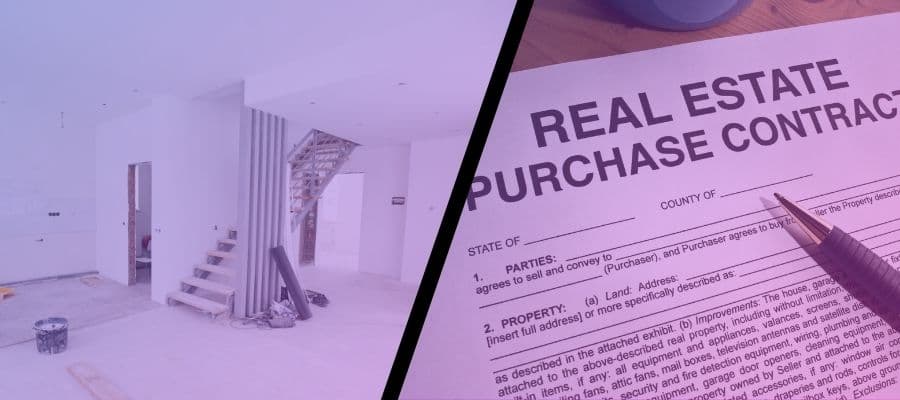

Flipping houses and wholesaling can both turn a profit on distressed or off-market properties. But the two strategies ask very different things of you in terms of cash, time, skill, and risk.
A house flipper buys a property, fixes it up, and sells it for more than they put in. A wholesaler usually signs a purchase contract and then hands it off to another buyer for a fee. If you are still building your buyer list or learning how contract assignments work, our guide on how to start wholesaling walks through the basics step by step.
We looked at current home-flipping market data, state regulatory resources, common transaction costs, and lessons shared by investor Matt DuPre on the DealMachine REI Podcast. The goal is to give you a clear, practical way to compare both strategies before you pick an exit plan.
Flipping houses tends to pay more per deal. Wholesaling usually needs less capital and keeps you away from construction headaches. The right choice depends on the property, your resources, your market, and how the deal is structured.
Flipping vs. Wholesaling at a Glance
|
Factor |
House Flipping |
Wholesaling |
|
Capital Required |
High. Covers purchase, renovation, financing, and holding costs |
Low. Mainly earnest money and marketing costs |
|
Typical Timeline |
Months, depending on renovation scope |
Days to a few weeks, based on the contract deadline |
|
Skill Level Needed |
Construction knowledge, project management, market analysis |
Negotiation, lead generation, contract knowledge |
|
Risk Exposure |
Higher. Repair overruns, financing costs, and market shifts all fall on you |
Lower on the property itself, but the deal can fall through if a buyer isn't found in time |
|
Profit Potential Per Deal |
Usually higher |
Usually lower, but requires far less cash tied up |
This table is a general guide, not a guarantee. Every market and property will shift these numbers.
What Is Flipping Houses?
Flipping houses means buying it, fixing it up, and selling it for more than you spent in total.
Since you take ownership of the property, you are on the hook for financing, insurance, taxes, repairs, utilities, security, upkeep, and the final sale. A typical flip runs through these steps: find a property with strong potential, estimate its after-repair value, inspect it and build a repair budget, line up financing, close, renovate, then list and sell.
The purchase price and resale price only tell part of the story. A deal that looks great on paper can turn weak once you add up loan costs, delays, commissions, and repairs nobody saw coming.
How Flippers Make Money
The basic math looks like this: resale price minus purchase price, renovation costs, financing expenses, holding costs, closing costs, and selling expenses equals your estimated net profit.
That word "estimated" matters. A property might need more work than planned, and the resale market can shift while your project is underway.
Recent national data backs this up. Industry data from ATTOM found that roughly 64,000 single-family homes and condos were flipped in the first quarter of 2026, with a typical gross profit around $66,000. But that number only measures the gap between purchase and resale price. It does not reflect what an investor actually took home after paying for renovations and other project costs. Results depended heavily on purchase price, renovation spending, projected value, and how long the project took. A strong resale price could not always make up for a thin purchase spread or high project costs.
Our breakdown of the 70% rule for house flipping is a useful gut check for setting a purchase price that still leaves room for profit after repairs.
What Is Real Estate Wholesaling?
Wholesaling usually starts when you sign a purchase agreement with a property owner. From there, you look for another buyer who wants to take over your contractual interest.
You get paid an assignment fee when the contract changes hands. Some investors use a different closing structure after getting legal guidance, so it pays to know your options.
A typical wholesale deal looks like this: find a motivated seller, review the property and local sales, estimate repairs and likely investor value, negotiate a price, sign a valid contract, complete required disclosures, present the deal to buyers, then assign or close it under local law.
Wholesalers usually do not renovate the home themselves. But you still need to understand repair costs, because the buyer you bring in will use those numbers to decide what the contract is worth.
How Wholesalers Make Money
A wholesaler usually earns the gap between what they agreed to pay the seller and what an end buyer agrees to pay for that contract.
Say you sign a contract to buy a house for $145,000, and a local investor agrees to take over that contract for $153,000. Your potential assignment fee is $8,000, before marketing, legal, title, and other business costs.
A wholesale deal can fall apart when the purchase price is too high, the repair estimate is too low, the after-repair value does not hold up, the title has problems, the contract cannot be assigned, your buyer list is thin, required disclosures get missed, or state licensing rules are not followed. Wholesaling is a real estate activity with real legal and financial weight. It is not a shortcut that skips the risk.
Comparing the Numbers
Picture a vacant house with an after-repair value of $265,000, and a seller willing to accept $150,000.
In a flip scenario, you might spend around $237,000 total once you add renovation, financing, taxes, insurance, and selling costs, then sell for $265,000. That leaves roughly $28,000 in estimated net income, over about six months.
In a wholesale scenario, you assign that same contract to another investor for $160,000. After marketing and transaction costs of about $1,500, you walk away with roughly $8,500, often within a few weeks.
The flip pays more in this example, but it ties up far more cash and time, and it carries more risk if repairs run over budget. If the flip needs another $12,000 in unexpected repair work, that $28,000 estimated profit can drop to $16,000 fast. A wholesaler would not face that repair bill directly, but a buyer who spots the same problem may lower the assignment price or walk away from the deal entirely.
A Quick Way to Decide
If you are staring at a specific property and not sure which exit fits, walk through these questions first:
- Do you have enough capital to cover the full purchase, renovation, and holding period, plus a cushion for surprises? If not, wholesaling keeps your cash exposure low.
- Do you have reliable contractors and the time to manage a renovation? If not, a flip will be harder to control.
- Is the repair scope small and predictable, or does it involve major systems like plumbing, electrical, or foundation work? Bigger unknowns favor wholesaling or a more conservative flip budget.
- Do you already have buyers who want this type of property? A strong buyer list makes wholesaling faster and more reliable.
- Does the local market support the after-repair value you are targeting? Check recent comparable sales before committing to a flip.
None of these questions has a universal right answer. They just help you match the deal to your resources instead of forcing a strategy that does not fit.
Which Strategy Fits Your Business?
Flipping may be the stronger choice when you can buy well below supported resale value, you have a detailed repair scope, reliable contractors, clear financing terms, reserves for surprises, and renovated homes are actually selling in your area. Before committing, check current housing conditions through the National Association of Realtors housing statistics to see whether local demand supports your projected resale price.
Wholesaling may be the stronger choice when you have limited capital, you would rather not manage contractors, you have an active network of buyers, and you understand assignment language, disclosures, and your state's licensing rules. It can also be a good way to learn how to talk with sellers and analyze deals before you take on a full renovation, though beginners should not sign contracts without knowing the duties and deadlines that come with them.
Wholesaling rules vary by state and can involve licensing, advertising limits, disclosure requirements, and contract terms. Some states, like Oklahoma, require a real estate license to wholesale. Others handle it differently. This article is educational, not legal advice, so check your state's current rules or talk to a real estate attorney before you sign or advertise a wholesale contract.
Can You Do Both?
Many investors use both strategies and let the property decide. You might flip a house when the repair plan is manageable, and the resale numbers work, and wholesale another one when it is a better fit for a landlord or experienced rehabber than for your own business.
Matt DuPre talked about this exact approach on the DealMachine REI Podcast. He learned wholesaling while flipping houses, then went on to complete assignment deals with a wide range of fees. His experience shows you do not have to lock yourself into one strategy, but personal success stories should never replace careful number-crunching. Every property has to earn its own numbers.
DealMachine can help you build property lists, log leads, pull property information, and stay on top of seller follow-up. Those tools support the lead-generation side of your business, but the software will not tell you whether to flip or wholesale a specific house. That call still comes down to your numbers, your legal obligations, your buyers, your contractors, and the capital you have on hand.
Flipping tends to pay more per property, but it asks for more money, more management, and more risk. Wholesaling tends to pay less per deal, but it moves faster and requires less cash up front, along with careful analysis, solid buyers, and close attention to your state's laws. The strongest investors do not pick a strategy based on the biggest possible check. They weigh the full cost, timeline, legal requirements, workload, and downside before they commit.
FAQs
Is flipping houses more profitable than wholesaling?
Flipping can generate more income from a single property because you complete the renovation and resale yourself. Wholesaling usually pays less per deal, but it often needs less capital and a shorter timeline.
How much money do you need to flip a house?
It depends on your purchase price, financing terms, repair scope, closing costs, and how long you hold the property. Build a full budget and keep extra reserves for repairs or delays that were not part of your first estimate.
Can you wholesale real estate without a license?
It depends on your state. Oklahoma requires wholesalers to hold a real estate license, while other states apply different licensing, disclosure, or advertising rules. Check your state's current law and talk with a local real estate attorney before signing contracts.
Is wholesaling easier than flipping houses?
Wholesaling skips most of the renovation and ownership work, but it still takes lead generation, negotiation, property analysis, legal compliance, and a reliable buyer network. It is a different business model, not an effortless version of flipping.
Can one property be analyzed for both strategies?
Yes. You can estimate a possible flip profit and a likely wholesale assignment fee for the same house before you decide. Base the final call on the numbers, the contract, your available capital, market demand, and local law.